News & field notes
Catch up on the latest from Newert
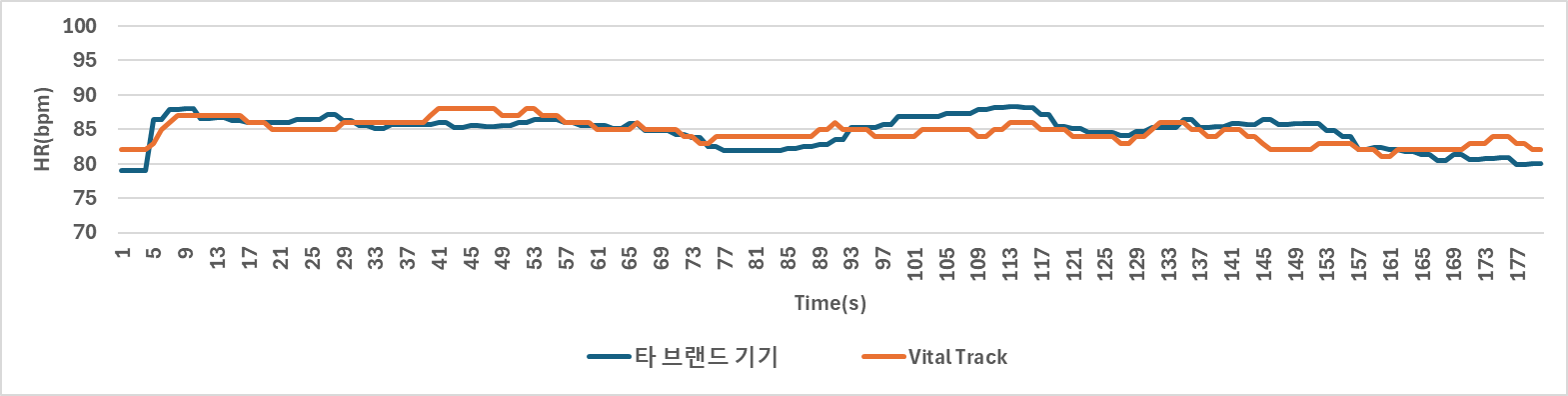
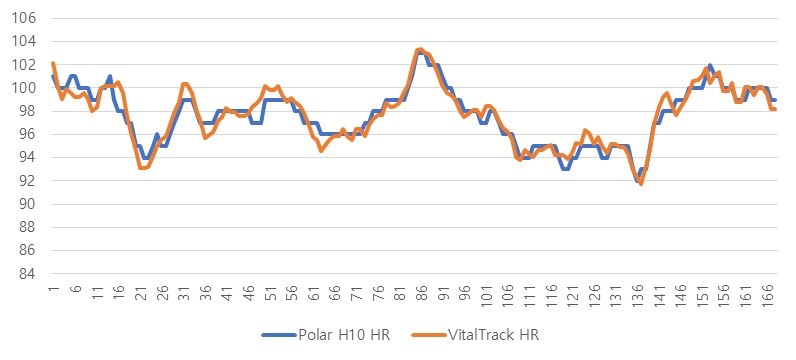
In this post we compare heart rate data from VitalTrack and a device from another brand while walking. The previous post compared the two devices at rest; this time we look at how accurately VitalTrack measures heart rate while the wearer walks. Three metrics were used for the comparison: the correlation coefficient (R), MAE (mean absolute error), and error rate. Participants walked for three minutes with the reference device on the chest and VitalTrack on the wrist, with heart rate recorded every second.
Comparing the data through the correlation coefficient (R), MAE, and error rate. In cardiovascular research, accurate heart rate (HR) data matters a great deal. This post compares heart rate data from VitalTrack and a device from another brand at rest, with no movement, using three metrics: the correlation coefficient (R), MAE (mean absolute error), and error rate. Difference in measurement method — ECG vs PPG: the other brand's device monitors cardiac activity through electrical signals, while VitalTrack uses an optical sensor to detect changes in blood flow.